Do You Need a Permit for a Dumpster or Dump Trailer in Pinellas County?
The short answer is that you may not need a separate placement permit if your dumpster or dump trailer stays entirely on an approved private driveway. However, placing either one on a public street, sidewalk, or right-of-way may require permission from your local government.
Whether you're cleaning out a garage, renovating a home, or removing construction debris, checking placement rules before delivery can save you time and unnecessary expenses.
What's the Difference Between a Dumpster and a Dump Trailer?
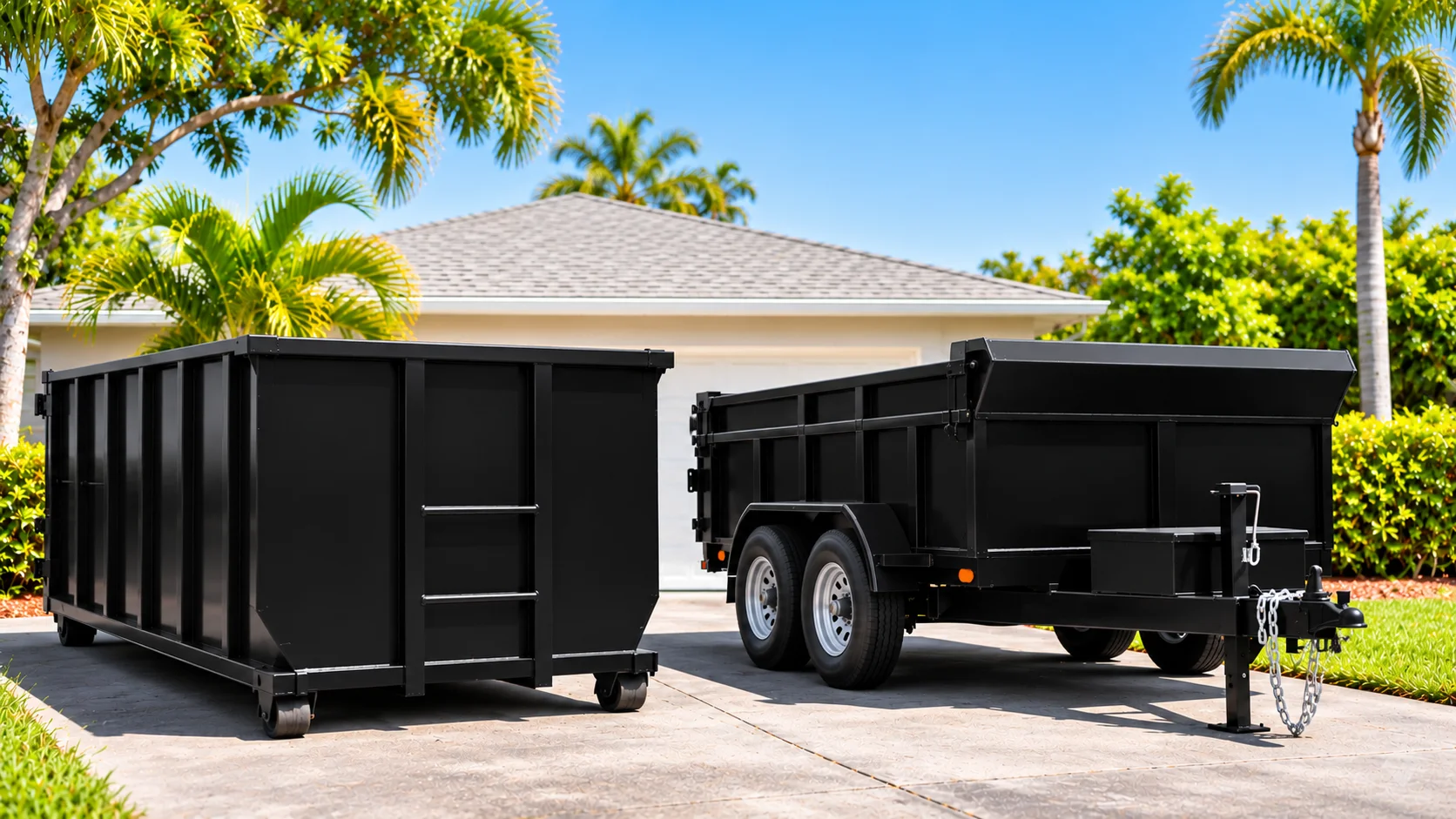
A traditional dumpster is a large container delivered by a specialized truck. It's commonly used for construction projects, major renovations, and property cleanouts.
A dump trailer is a towable container that can be delivered to your property and picked up when you're finished loading. Many dump trailers have lower sides or rear gates, making them convenient for loading furniture, yard waste, and household junk.
For example, a homeowner replacing old furniture might prefer a dump trailer that fits comfortably in the driveway. Meanwhile, a contractor handling a larger renovation might need a roll-off dumpster with greater capacity.
The best choice depends on the amount of debris, available space, and weight of the materials you're removing.
When Do You Need a Permit in Pinellas County?
Permit requirements depend primarily on where you place the container.
If your dumpster or dump trailer fits completely on private property, a separate right-of-way permit is generally not needed. However, other local restrictions may still apply.
If the container extends into a public street, sidewalk, or other public right-of-way, you may need authorization before delivery.
Pinellas County has 24 incorporated municipalities, and individual cities can enforce their own placement regulations. Requirements in St. Petersburg may differ from those in Clearwater, Largo, or Pinellas Park.
For properties in unincorporated areas, review the Pinellas County Right-of-Way Utilization Permit requirements.
Common Mistakes Homeowners Should Avoid
One common mistake is assuming that a dump trailer doesn't need permission because it has wheels. Local placement restrictions can still apply to trailers parked on public property.
Another mistake is overlooking the space needed for delivery. A container might fit in your driveway, but the delivery truck may need additional clearance to position it safely.
Homeowners should also consider weight restrictions. Concrete, dirt, roofing shingles, and other heavy materials can reach a trailer's weight limit faster than ordinary household junk.
Finally, don't forget about homeowner association rules. Even when local government permits aren't required, an HOA may restrict temporary containers or limit how long they can remain outside.
How to Prepare Before Renting a Dumpster or Dump Trailer
Start by measuring your driveway and checking for overhead obstacles, parked vehicles, and narrow access points.
Next, confirm whether your property is located within city limits or unincorporated Pinellas County. Contact the appropriate local government if you plan to use a public street or right-of-way.
Before scheduling delivery, ask your rental provider about container dimensions, accepted materials, weight allowances, rental periods, and additional fees.
For example, a weekend garage cleanout may involve lightweight furniture, boxes, and household clutter. A driveway renovation could produce heavy concrete debris requiring a different loading arrangement.
Knowing these details beforehand helps you choose suitable equipment and avoid unexpected charges.
Which Option Should You Choose?
Both dumpsters and dump trailers can make cleanup projects easier. The right option depends on your property, the materials you're removing, and how much space is available.
For smaller residential projects, a dump trailer may provide convenient loading and flexible placement. Larger construction projects may benefit from a traditional dumpster, depending on the required capacity.
At St. Pete Junk Removal, we help customers throughout St. Petersburg and surrounding Pinellas County communities find practical solutions for unwanted materials.
If you're planning a cleanup, contact our team to discuss available dump trailer services, placement considerations, and your project's requirements.
Call 727-610-8146 today for a free estimate and get your cleanup project started.
Before placing a dumpster or dump trailer on a public street or right-of-way, check the Pinellas County Right-of-Way Utilization Permit (opens in new tab) requirements to determine whether approval is necessary.
Before starting your cleanup project, visit the Pinellas County Solid Waste Department (opens in new tab) to learn more about local disposal guidelines, recycling options, and proper waste management.