How to Choose the Right Dump Trailer Size
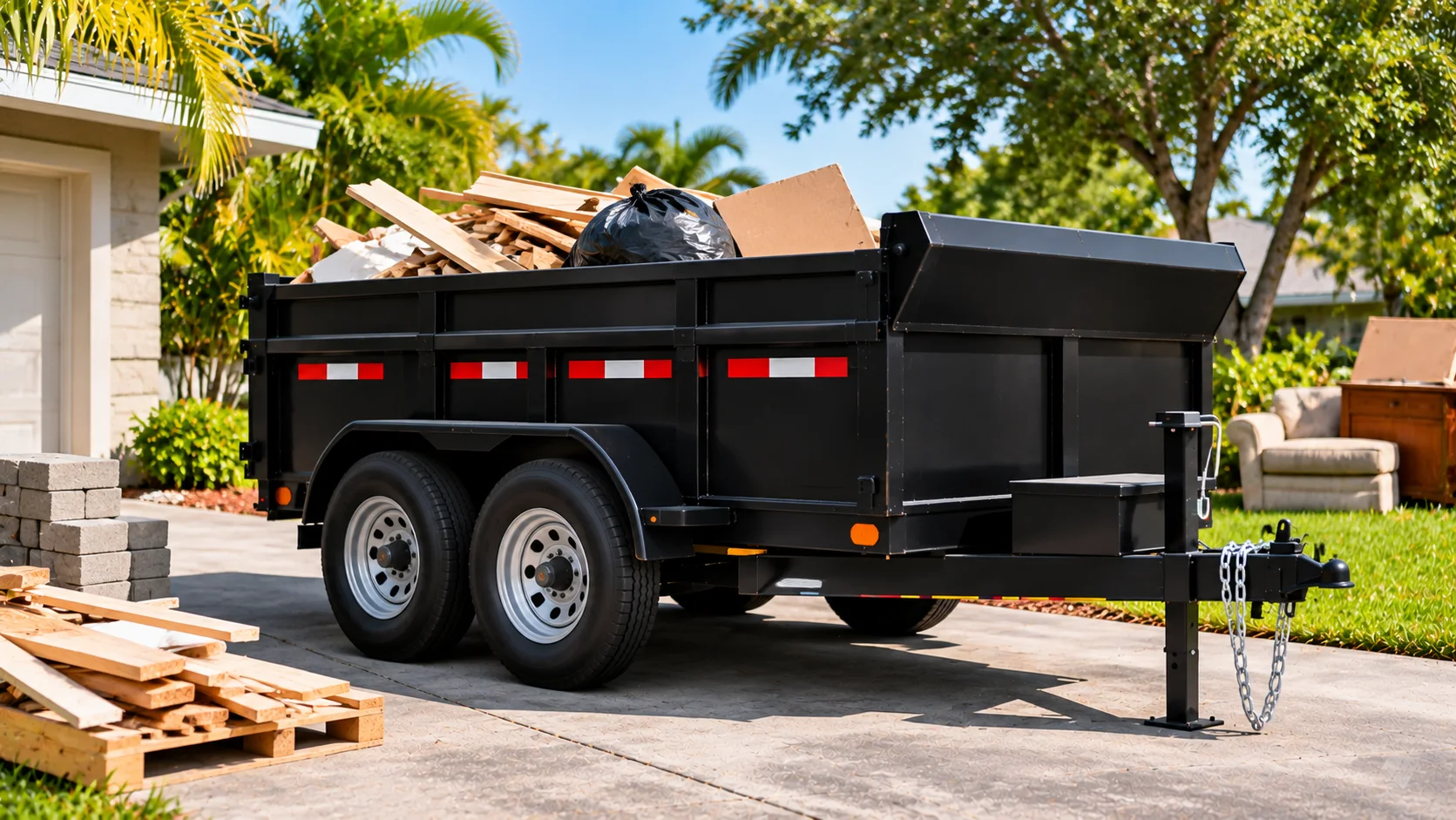
The right dump trailer size depends on how much junk you have, how heavy it is, and what type of project you're completing. Smaller household cleanouts may only require 5 to 8 cubic yards of capacity. However, larger cleanouts and remodeling projects may require 10 to 15 cubic yards or multiple loads.
Choosing the right size beforehand helps you avoid running out of space, overloading the trailer, or paying for more capacity than you need.
Understanding Dump Trailer Sizes
Dump trailer capacity is typically measured in cubic yards. One cubic yard equals 27 cubic feet, or a space measuring three feet long, three feet wide, and three feet high.
Here are some general sizing recommendations:
- 5–8 cubic yards: Small garage cleanouts, yard debris, and minor household projects.
- 8–10 cubic yards: Furniture removal, apartment cleanouts, and smaller remodeling projects.
- 10–15 cubic yards: Larger property cleanouts, estate cleanouts, and substantial renovation projects.
- 15 cubic yards or more: Extensive cleanouts and major remodeling projects, depending on material weight and trailer availability.
These are general estimates rather than guaranteed capacity requirements. Bulky furniture and irregularly shaped materials can take up more room than expected.
Choosing a Dump Trailer for Household Cleanouts
If you're cleaning out a garage, start by identifying everything you want to remove. Old furniture, storage boxes, broken appliances, and exercise equipment can quickly fill a trailer.
For example, a garage containing a couch, several chairs, shelving, and boxes may require approximately 5 to 8 cubic yards. Meanwhile, clearing several furnished rooms could require 10 to 15 cubic yards or additional hauling trips.
When estimating space, consider whether furniture can be safely disassembled to reduce its overall volume.
Choosing a Dump Trailer for Remodeling Projects
Remodeling projects often generate heavier debris than ordinary household cleanouts. Drywall, flooring, cabinets, tiles, and lumber can add significant weight to a trailer.
A small bathroom remodel might require less capacity than a complete kitchen renovation. However, materials such as concrete and ceramic tiles can reach the trailer's weight limit before filling its available space.
Before loading renovation debris, review the EPA's guidance on sustainable management of construction and demolition materials (opens in new tab) to learn about responsible disposal, recycling, and material recovery.
Always discuss the materials you're removing with your hauling provider before choosing a trailer.
How to Calculate Your Debris Volume
You can estimate your debris volume by measuring the length, width, and height of your junk pile in feet.
Multiply those three measurements, then divide the result by 27 to calculate the approximate cubic yards.
For example, a debris pile measuring 9 feet long, 6 feet wide, and 4 feet high contains approximately 8 cubic yards.
Remember to allow extra space for irregularly shaped items and additional debris discovered during your cleanup.
Common Dump Trailer Sizing Mistakes
One common mistake is choosing a trailer based only on its physical dimensions. Volume capacity and legal payload capacity are two different things.
Understanding trailer towing and loading safety (opens in new tab) is important when handling heavy debris and preventing equipment from exceeding its recommended weight limits.
Another mistake is underestimating the amount of junk hidden inside closets, cabinets, and storage areas.
Customers should also avoid assuming that every material can be loaded into the same trailer. Heavy debris and restricted materials may require special arrangements.
What Should You Do Before Booking?
Take pictures of your unwanted items, estimate the amount of debris, and identify any particularly heavy materials. Additionally, measure your driveway to confirm there is enough space for trailer placement and delivery.
At St. Pete Junk Removal, we help homeowners, landlords, and contractors throughout St. Petersburg and surrounding Pinellas County communities find practical cleanup solutions.
Contact our team to discuss your project and determine which available hauling option best suits your needs.